

Project Summary Results
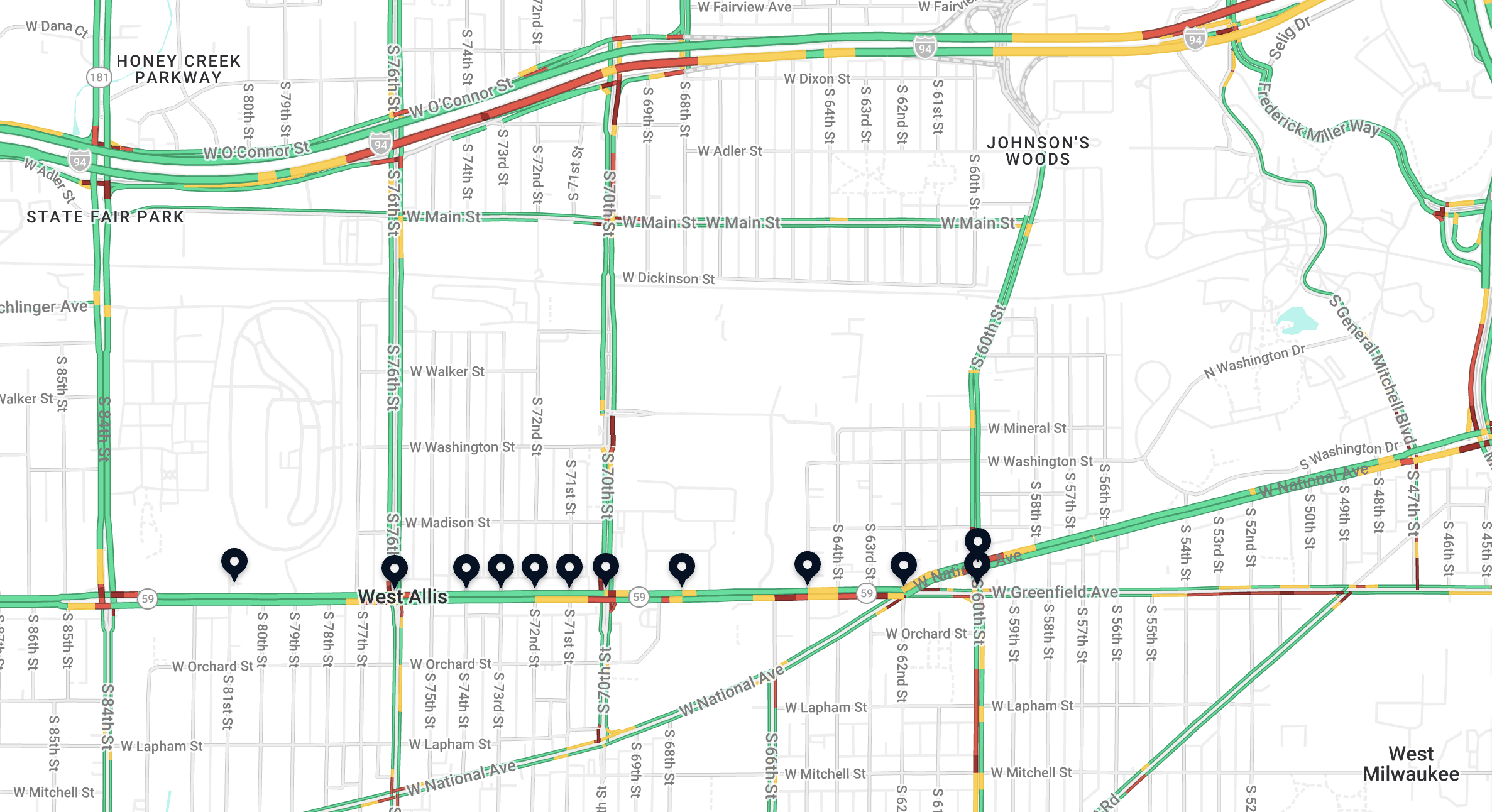
West Allis used NoTraffic Optimization to improve traffic flow during a major regional highway disruption while working entirely within the corridor’s existing roadway footprint. All-day vehicle delay fell 25.2%, while all-movement AM peak delay improved 22.0%.
Looking specifically at coordinated Greenfield Avenue through movements, mainline delay dropped 26.7% in the AM and 14.5% in the PM, demonstrating shorter per-vehicle waits along the corridor. Red-light running declined 7.4%, and the project is projected to deliver $25.5 million in economic value, 12,167 hours saved annually, 9,600 metric tons of CO₂ reduction over the five-year warranty period, and a 71:1 benefit-cost ratio.
The Result
NoTraffic Optimization improved overall corridor performance despite complex intersection geometry, saturated peak conditions, and competing demands between mainline and side-street movements. The strongest gains were seen in overall delay, AM peak operations, and coordinated Greenfield Avenue through movements.
Benefit-Cost Ratio: 71:1.
Control Delay: 25.2% reduction in overall weighted vehicle delay.
Overall Delay: 25.2% reduction, from 23.6 to 17.6 sec/vehicle.
Overall Peak: 22.0% AM reduction; 7.5% PM reduction.
Delay at Key Location: 26.7% AM coordinated mainline delay reduction.
AM Delay: 22.0% reduction across all movements.
PM Delay: 7.5% reduction across all movements.
Red-Light Running: 7.4% reduction.
| Metric | Improvement |
| Overall Delay | Reduced 25.2 % |
| Total hours saved (est 5 yr) | 12,167 |
| AM Mainline Delay | Reduced 26.7 % |
| PM Mainline Delay | Reduced 14.5 % |
| Red-Light Running | Reduced 7.4 % |
| AM Peak Delay | Reduced 22.0 % |
| PM Peak Delay | Reduced 7.5 % |
| Total Economic Value * | $ 25.5 M USD |
| CO₂ Reduction ** | Over 9,600 mt |
Smarter Signals Deliver Results Without Rebuilding
West Allis demonstrates what NoTraffic Optimization can do when agencies need to respond quickly to a transportation disruption without waiting for a major capital project. When a highway closure changed regional traffic patterns, the City used its existing signal infrastructure to improve progression, reduce delay, and manage competing movements across a complex urban corridor.
For agencies facing construction, detours, recurring congestion, or other sudden shifts in demand, the takeaway is practical: NoTraffic Optimization can continuously adjust signal operations to help the network respond as conditions change. In West Allis, that meant 25.2% less overall delay, improved coordinated mainline travel, fewer red-light running events, and a projected 71:1 benefit-cost ratio—without widening Greenfield Avenue or rebuilding intersections.
NOTES:
* Total Economic Value shown in USD and CAD represents time and gas savings over the initial 5-year warranty plus operational savings related to signal re-timing, included data and analytics package, persistent camera installation, and NOC support
** Over initial 5-year warranty period
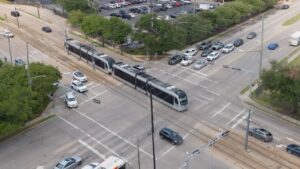
image source: https://www.visitmilwaukee.org/listing/visit-stallis/16910/