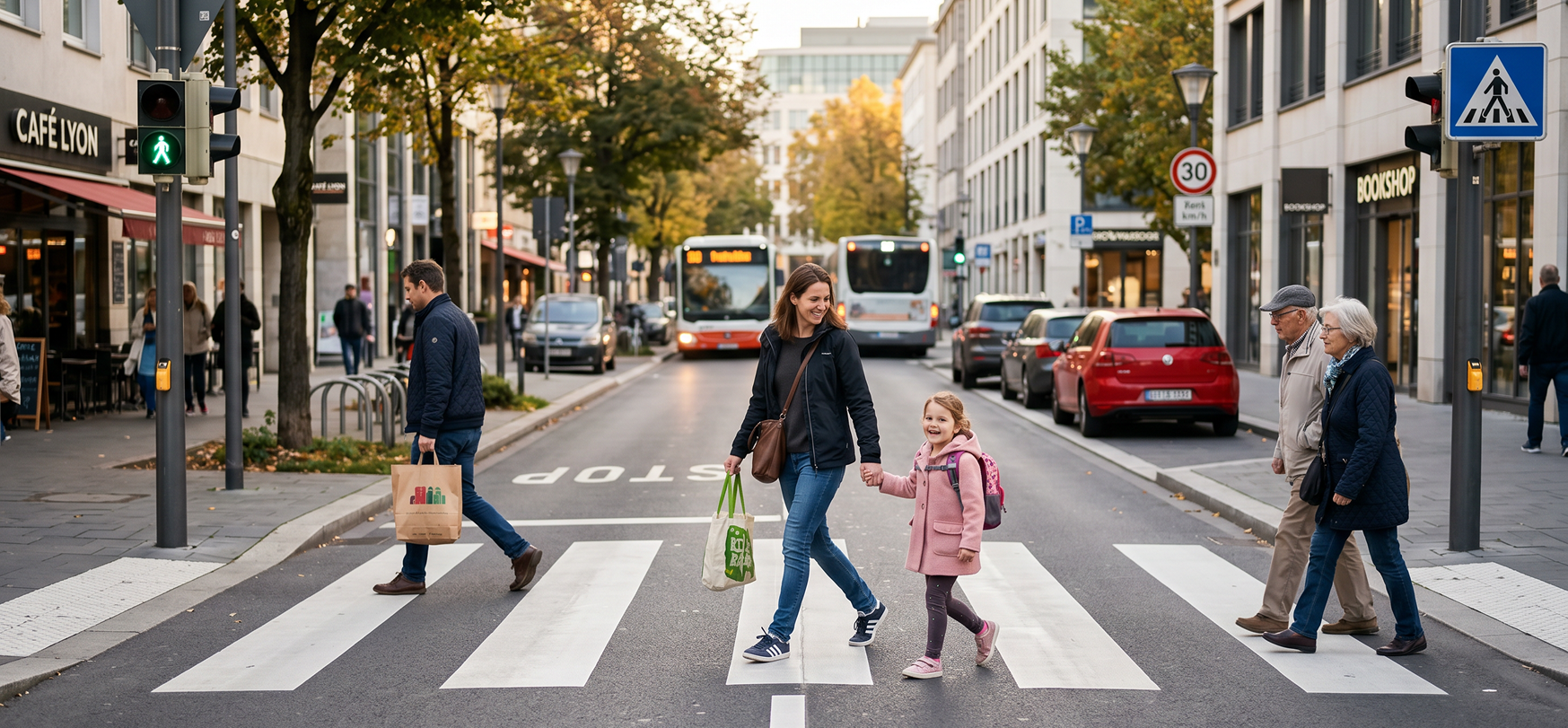
A pedestrian starts crossing with three seconds left on the countdown timer. Maybe it’s an older adult using a walker. Maybe a teenager on a scooter. Maybe a parent managing two children and a stroller.
The signal timing plan treats all the same. That’s the challenge many traffic engineers face today: balancing pedestrian safety with efficient operations using timing plans that can’t adapt to what’s actually happening in the crosswalk.
Why Static Pedestrian Timing is No Longer Enough
Most pedestrian timing plans are based on assumed walking speeds, not how people actually cross the street. The FHWA Traffic Signal Timing Manual states that pedestrian timing should give people enough time to finish crossing. Agencies calculate that timing using a standard walking speed and apply it to every pedestrian during every signal cycle.
Pedestrian timing guidance itself reflects that reality. The MUTCD has historically recommended a walking speed assumption of 4.0 feet per second (ft/s). ADA accessibility guidance recommends 3.0 ft/s. Other FHWA-supported research recommends using 3.5 ft/s for curb-to-curb clearance timing and 3.0 ft/s for full pedestrian crossing from ramp to curb. Agencies often reduce assumed walking speeds near schools, senior facilities, or areas with higher concentrations of vulnerable users.
Pedestrians are not static. They move at different speeds depending on age, mobility, weather conditions, distractions, crowding, and roadway geometry. Some need more time, some start late or maybe shoot through on e-mobility devices.
The controller doesn’t know the difference. It follows the programmed timing plan. Agencies have addressed this variability by increasing pedestrian time to the cycle. Often, that approach improves accessibility and safety. But it also creates another operational challenge.
The Safety vs. Efficiency Tradeoff
Traffic engineers are not choosing between safety and efficiency. They are trying to improve both.
Adding more pedestrian clearance time everywhere can:
- Reduce corridor progression
- Increase side street delay
- Create unnecessary green time
- Reduce intersection efficiency
At isolated intersections, the impact may be small. Along coordinated arterials, those extra seconds add up.
Vision Zero is Redefining Intersection Safety
At the same time, agencies face growing pressure to improve pedestrian safety. A 77% increase in pedestrian deaths over the past decade has increased the focus on vulnerable road users and intersection safety.
Agencies expect intersection technology to respond to real world conditions, not just fixed timing assumptions.
Adaptive Pedestrian Protection
Instead of extending pedestrian timing every cycle, dynamic pedestrian protection adds an extra layer of safety when pedestrians need more time to clear the crosswalk.
That’s the idea behind NoTraffic’s Ped Protect application.
Ped Protect uses existing NoTraffic fusion sensors to detect pedestrians still in the crosswalk during the clearance interval. When the system identifies a road user still crossing, the Nexus sends a signal to the controller.
How Ped Protect Works in the Field
Ped Protect works through a simple four step process:
- The agency creates a dedicated vulnerable road user (VRU) detection zone surrounding the crosswalk.
- NoTraffic sensors continuously detect pedestrians in the crossing area.
- The Nexus actuates the detector input to the controller
- The controller extends the pedestrian phase or clearance interval according to agency policy
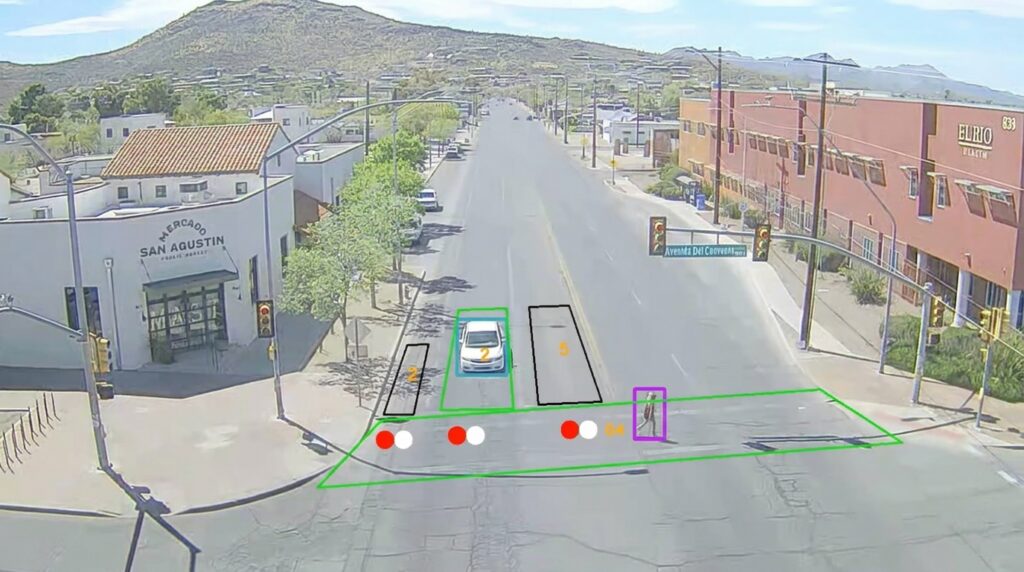
Because the extension only occurs when needed, agencies can improve pedestrian safety without permanently increasing crossing time.
Why Dynamic Protection Improves Operations
Dynamic pedestrian protection helps agencies maintain efficient timing plans while still protecting vulnerable users during unusual crossing conditions.
That creates operational benefits, including:
- Reduced unnecessary delay
- Improved corridor progression
- More efficient use of green time
- Better responsiveness to real world conditions
The future of pedestrian safety is dynamic.
Conventional pedestrian timing plans are designed to account for most crossing scenarios by using conservative assumed walking speeds. But even well designed timing plans cannot anticipate every real world situation.
Dynamic pedestrian protection provides an extra layer of coverage for those edge cases. Rather than relying solely on longer fixed timing plans that add delay every cycle, adaptive systems can respond only when extra crossing time is actually needed.
NoTraffic’s Ped Protect application is designed to provide that dynamic cushion — helping agencies support safer crossings while maintaining efficient intersection operations.
Want to learn how adaptive pedestrian protection can support safer and more efficient intersections? Explore NoTraffic’s Ped Protect application or connect with our experts to learn more.