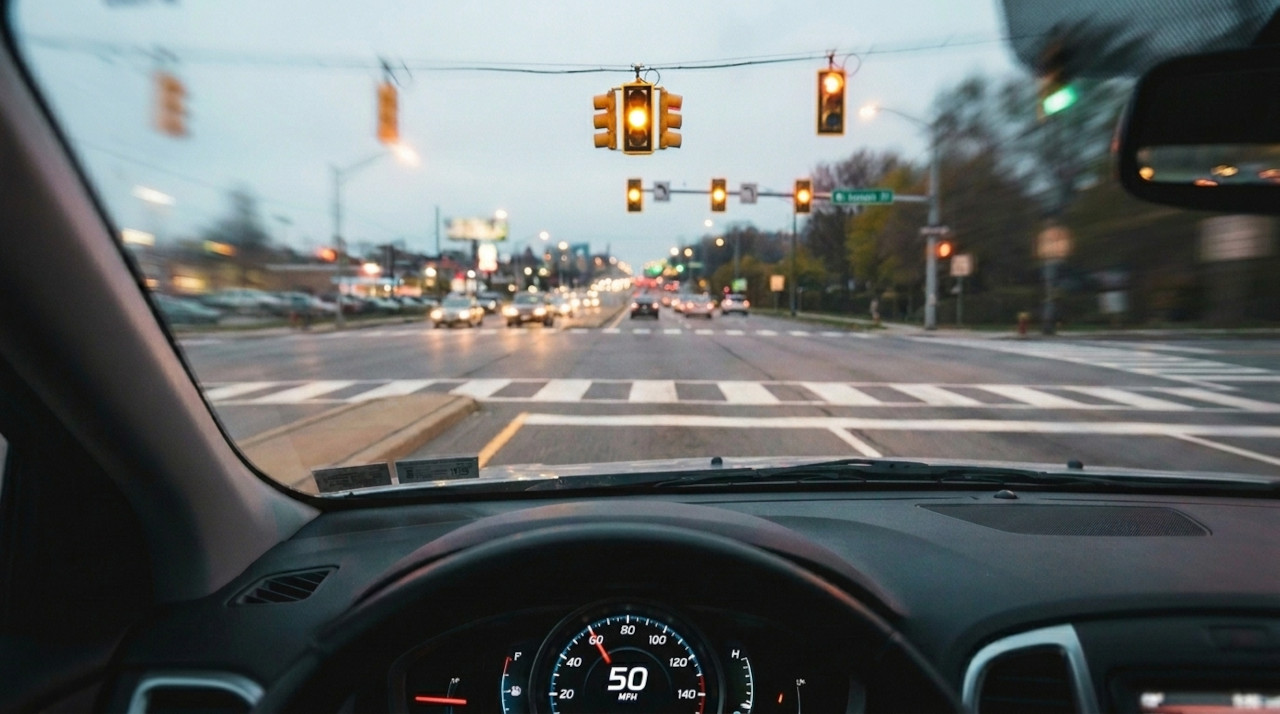
It’s 11 pm. You’re driving home in your town at 45 mph approaching an intersection when the light turns yellow.
Will you stop or go? What will the driver behind you do?
Welcome to the Dilemma Zone
A dilemma zone is an area on a signalized intersection approach where, at the onset of the yellow, a driver cannot comfortably make a safe decision to either stop before the stop bar or proceed through the intersection.

The dilemma zone is typically defined in terms of time, not distance. Industry standards (based on ITE guidance) place it approximately at 2.5–5.5 seconds of travel time upstream of the stop bar, depending on approach speed.
Why it Happens and Why It Matters for Safety and Operations
When drivers encounter a yellow light in this zone, inconsistent decisions lead to sudden hesitation or last second acceleration. The real problem isn’t whether drivers can stop, it’s that different drivers make different decisions under the same conditions – for example: the driver in front stops and the driver behind chooses to accelerate.
For agencies, this means:
- Higher rear-end crash rates
- Increased exposure to liability claims
- More public complaints about “short yellows”
- Reduced intersection efficiency and progression performance
This variability increases the risk of conflict and crashes, even if stopping is physically possible.
How Dilemma Zone Detection Works
Modern dilemma zone detection systems move beyond fixed assumptions and instead evaluate each vehicle in real-time. By using sensors that include radar, these systems continuously track:
- Speed and trajectory
- Distance to the stop bar
- Acceleration and deceleration behavior
Studies have shown that improved detection and signal timing can reduce delay, stop frequency, and red-light violations in high-risk approaches.
How NoTraffic Solves the Dilemma Zone
To effectively reduce risk and improve intersection performance, agencies should look for systems that go beyond basic detection and provide reliable, real-time decision support.
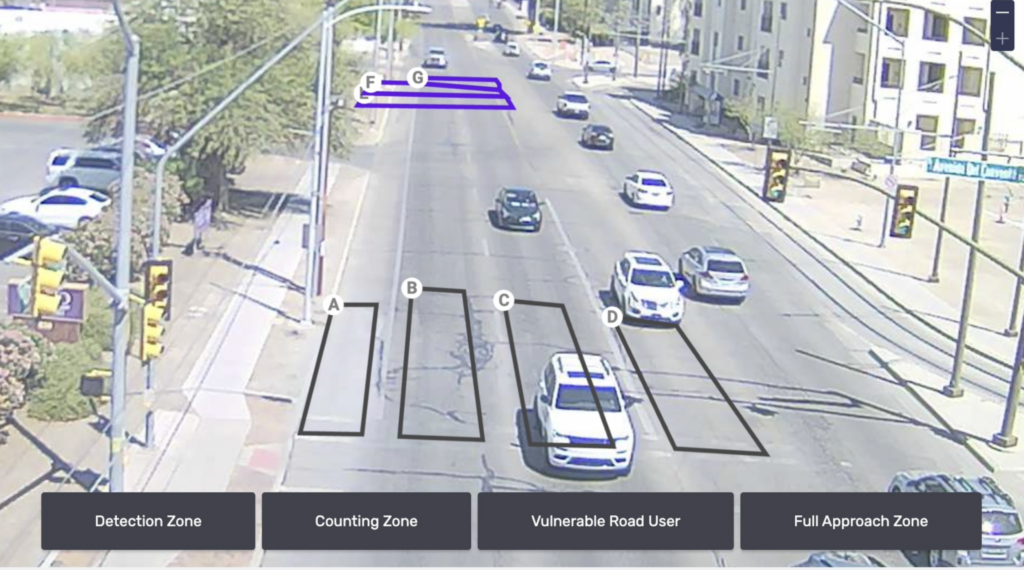
NoTraffic enables real-time decisions by tracking and monitoring each road user in real time to determine speed and distance from the stop bar. Agencies can use this intelligence to set up speed sensitive detection zones that assist drivers who are about to be served a yellow light on a high-speed approach.
By setting up a series of “trip-wire zones” (labeled E,F, and G in the diagram) the system will flag incoming traffic that meets or exceeds the target speed threshold at the target distance. This will trigger a signal to the controller. Following agency policies, the controller will then be able to extend the green for the incoming vehicle.
Key capabilities include:
- Accurate speed detection: to reflect real-world conditions
- Real-time trajectory tracking: to evaluate each vehicle’s ability to stop or proceed
- Reliable advanced detection coverage: to identify vehicles before they enter the decision zone
- Compatibility with existing controllers: to enable deployment without major infrastructure changes
- Access to analytics and performance data: to monitor safety and operational outcomes
- Remote monitoring and configuration: to reduce field visits and improve responsiveness.
Together, these capabilities allow agencies to move from static timing assumptions to data driven, real-time intersection management.
Want to see how real-time detection can reduce dilemma zone risk at your intersections? Explore NoTraffic’s Dilemma Zone application or connect with our traffic operations team.