

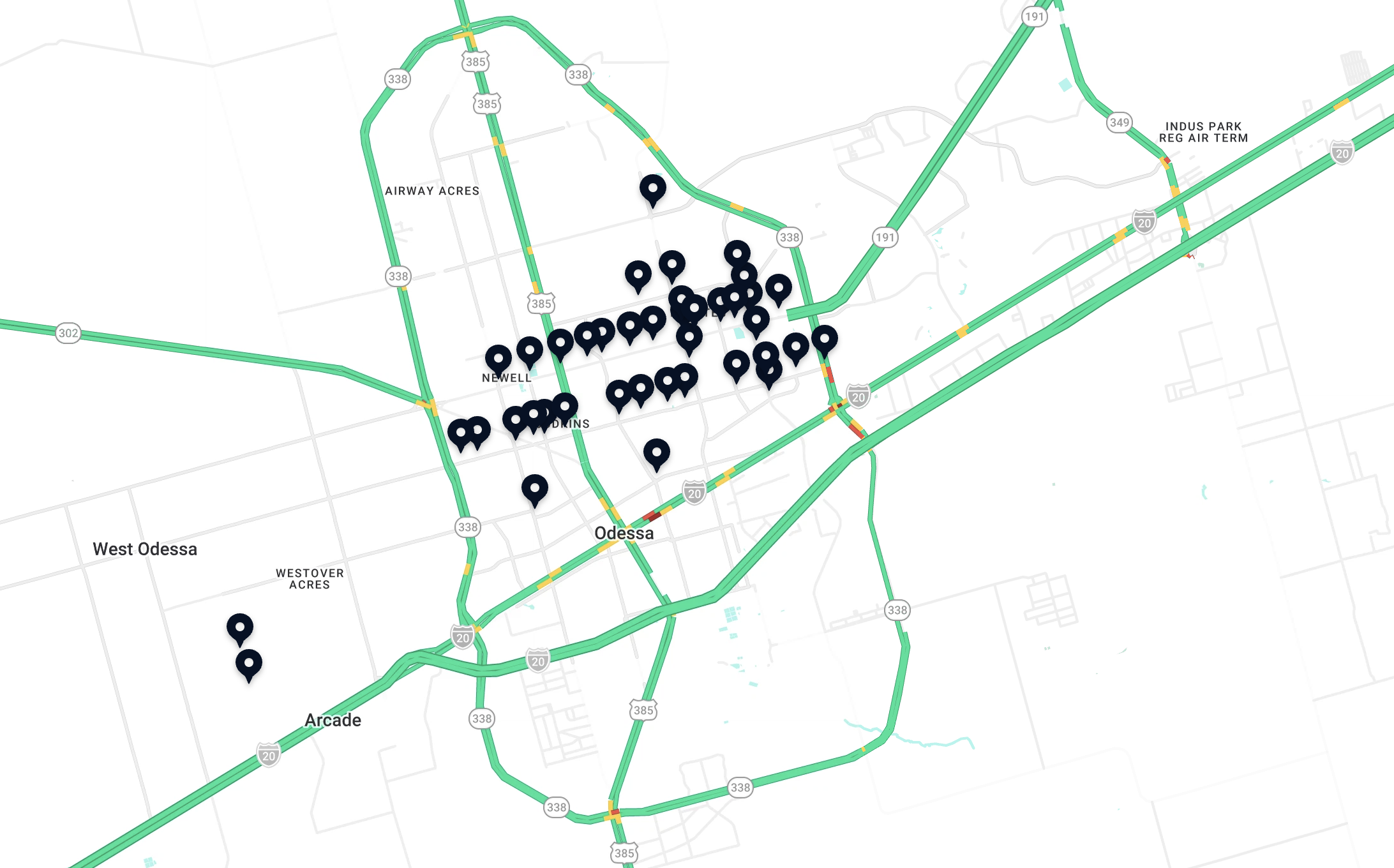
On E 42nd St, Optimization reduced corridor delay 17.0%, equal to about 700,000 vehicle-hours annually, while red-light-running events fell 30.6%. At 42nd & Grandview, westbound left-turn delay fell 62.8%, from 401 to 149 seconds, while total intersection delay also declined. Average platoon size increased 36.7%, supporting stronger progression, especially during the PM peak.
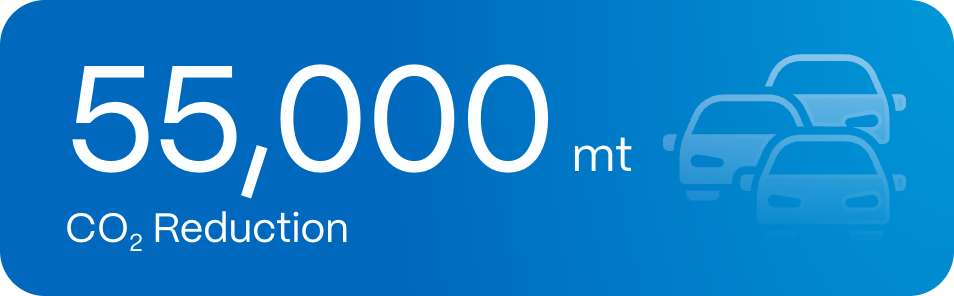
Over five years, the report estimates 55,000 metric tons of CO₂ avoided, $145.1 million in economic value and a 279:1 benefit-cost ratio.
The Result
Odessa achieved corridor-wide gains while also solving a high-priority movement. The strongest documented outcomes combine less delay, fewer red-light-running events, larger platoons and substantial economic value.
| Metric | Improvement |
| Overall Delay | Reduced 17% |
| Grandview Left-Turn Delay | Reduced 63% |
| Red-Light Running | Reduced 31% |
| Delay reduced per year | 700,000 vehicle-hours |
| Average Platoon Size | Increased 37% |
| Total Economic Value * | $ 145.1 M USD |
| CO₂ Reduction ** | 55,000 mt |
Odessa Delivers Corridor-Wide Gains with Optimization
Odessa shows agencies how NoTraffic Optimization can address both corridor-wide performance and individual trouble spots. Using real-time detection, the system can determine when to end and begin phases while retaining agency-defined sequences and clearance times. That can reduce system delay, relieve a movement that routinely backs up, strengthen platoons and make red-light running a measurable operational KPI. For agencies managing busy arterials, Odessa demonstrates a measurable way to get more performance and economic value from existing signal infrastructure.
NOTES:
* Total Economic Value represents time and gas savings over the initial 5-year warranty plus operational savings related to signal re-timing, included data and analytics package, persistent camera installation, and NOC support
** Over initial 5-year warranty period